Skip to content

Effective and tolerable!

Free shipping from €69

100% pure Nobel Kava from Vanuatu!

Menu
HomeShopAbout
Search
Kava-Mode
Search
Account
View my cart (0)
View my cart (0)
0
Home Shop About
More
preparation Recipes Sortenwahl Blog

Language Deutsch English Polski

Country/region Afghanistan · EUR € Åland Islands · EUR € Albania · EUR € Algeria · EUR € Andorra · EUR € Angola · EUR € Anguilla · EUR € Antigua & Barbuda · EUR € Argentina · EUR € Armenia · EUR € Aruba · EUR € Ascension Island · EUR € Australia · EUR € Austria · EUR € Azerbaijan · EUR € Bahamas · EUR € Bahrain · EUR € Bangladesh · EUR € Barbados · EUR € Belarus · EUR € Belgium · EUR € Belize · EUR € Benin · EUR € Bermuda · EUR € Bhutan · EUR € Bolivia · EUR € Bosnia & Herzegovina · EUR € Botswana · EUR € Brazil · EUR € British Indian Ocean Territory · EUR € British Virgin Islands · EUR € Brunei · EUR € Bulgaria · EUR € Burkina Faso · EUR € Burundi · EUR € Cambodia · EUR € Cameroon · EUR € Cape Verde · EUR € Caribbean Netherlands · EUR € Cayman Islands · EUR € Central African Republic · EUR € Chad · EUR € Chile · EUR € China · EUR € Christmas Island · EUR € Cocos (Keeling) Islands · EUR € Colombia · EUR € Comoros · EUR € Congo - Brazzaville · EUR € Congo - Kinshasa · EUR € Cook Islands · EUR € Costa Rica · EUR € Côte d’Ivoire · EUR € Croatia · EUR € Curaçao · EUR € Cyprus · EUR € Czechia · EUR € Denmark · EUR € Djibouti · EUR € Dominica · EUR € Dominican Republic · EUR € Ecuador · EUR € Egypt · EUR € El Salvador · EUR € Equatorial Guinea · EUR € Eritrea · EUR € Estonia · EUR € Eswatini · EUR € Ethiopia · EUR € Falkland Islands · EUR € Faroe Islands · EUR € Fiji · EUR € Finland · EUR € France · EUR € French Guiana · EUR € French Polynesia · EUR € French Southern Territories · EUR € Gabon · EUR € Gambia · EUR € Georgia · EUR € Germany · EUR € Ghana · EUR € Gibraltar · EUR € Greece · EUR € Greenland · EUR € Grenada · EUR € Guadeloupe · EUR € Guatemala · EUR € Guernsey · EUR € Guinea · EUR € Guinea-Bissau · EUR € Guyana · EUR € Haiti · EUR € Honduras · EUR € Hong Kong SAR · EUR € Hungary · EUR € Iceland · EUR € India · EUR € Indonesia · EUR € Iraq · EUR € Ireland · EUR € Isle of Man · EUR € Israel · EUR € Italy · EUR € Jamaica · EUR € Japan · EUR € Jersey · EUR € Jordan · EUR € Kazakhstan · EUR € Kenya · EUR € Kiribati · EUR € Kosovo · EUR € Kuwait · EUR € Kyrgyzstan · EUR € Laos · EUR € Latvia · EUR € Lebanon · EUR € Lesotho · EUR € Liberia · EUR € Libya · EUR € Liechtenstein · EUR € Lithuania · EUR € Luxembourg · EUR € Macao SAR · EUR € Madagascar · EUR € Malawi · EUR € Malaysia · EUR € Maldives · EUR € Mali · EUR € Malta · EUR € Martinique · EUR € Mauritania · EUR € Mauritius · EUR € Mayotte · EUR € Mexico · EUR € Moldova · EUR € Monaco · EUR € Mongolia · EUR € Montenegro · EUR € Montserrat · EUR € Morocco · EUR € Mozambique · EUR € Myanmar (Burma) · EUR € Namibia · EUR € Nauru · EUR € Nepal · EUR € Netherlands · EUR € New Caledonia · EUR € New Zealand · EUR € Nicaragua · EUR € Niger · EUR € Nigeria · EUR € Niue · EUR € Norfolk Island · EUR € North Macedonia · EUR € Norway · EUR € Oman · EUR € Pakistan · EUR € Palestinian Territories · EUR € Panama · EUR € Papua New Guinea · EUR € Paraguay · EUR € Peru · EUR € Philippines · EUR € Pitcairn Islands · EUR € Poland · EUR € Portugal · EUR € Qatar · EUR € Réunion · EUR € Romania · EUR € Russia · EUR € Rwanda · EUR € Samoa · EUR € San Marino · EUR € São Tomé & Príncipe · EUR € Saudi Arabia · EUR € Senegal · EUR € Serbia · EUR € Seychelles · EUR € Sierra Leone · EUR € Singapore · EUR € Sint Maarten · EUR € Slovakia · EUR € Slovenia · EUR € Solomon Islands · EUR € Somalia · EUR € South Africa · EUR € South Georgia & South Sandwich Islands · EUR € South Korea · EUR € South Sudan · EUR € Spain · EUR € Sri Lanka · EUR € St. Barthélemy · EUR € St. Helena · EUR € St. Kitts & Nevis · EUR € St. Lucia · EUR € St. Martin · EUR € St. Pierre & Miquelon · EUR € St. Vincent & Grenadines · EUR € Sudan · EUR € Suriname · EUR € Svalbard & Jan Mayen · EUR € Sweden · EUR € Switzerland · EUR € Taiwan · EUR € Tajikistan · EUR € Tanzania · EUR € Thailand · EUR € Timor-Leste · EUR € Togo · EUR € Tokelau · EUR € Tonga · EUR € Trinidad & Tobago · EUR € Tristan da Cunha · EUR € Türkiye · EUR € Tunisia · EUR € Turkmenistan · EUR € Turks & Caicos Islands · EUR € Tuvalu · EUR € U.S. Outlying Islands · EUR € Uganda · EUR € Ukraine · EUR € United Arab Emirates · EUR € United Kingdom · EUR € United States · EUR € Uruguay · EUR € Uzbekistan · EUR € Vanuatu · EUR € Vatican City · EUR € Venezuela · EUR € Vietnam · EUR € Wallis & Futuna · EUR € Western Sahara · EUR € Yemen · EUR € Zambia · EUR € Zimbabwe · EUR €

Search

Cart

-

Your cart is empty

Loading...

You might also like
Subtotal €0,00 EUR

Tax included. Shipping calculated at checkout.

News

Kava und soziale Interaktion: Verbindung ohne Filter - Der natürliche Weg zu authentischen Beziehungen
May 31, 2026

Kava and Social Interaction: Connecting Without Filters - The Natural Path to Authentic Relationships

Kava for Social Interaction: Learn how kava relaxes, reduces social anxiety, and promotes authentic conversations without alcohol.

Subscribe to our newsletter and save 5%!

5% discount on your entire order. Subscribe to our newsletter and receive exciting information about kava's active ingredients, effects, history, and tradition.

Register here

Kava FAQ – Questions and Answers

Kava is something completely new to many people. You'll find answers to many questions here in our FAQ section. If you still have questions, feel free to email us anytime.

Kava Basics

What is kava?

Kava (Piper methysticum) is a traditional Pacific plant whose roots have been valued for over 3,000 years for their relaxing and anxiolytic properties. The roots contain natural compounds called kavalactones, which have a calming and muscle-relaxing effect without clouding consciousness.

Important: Kava relaxes the body without paralyzing the mind – a unique profile of effects among natural relaxants.

Where does kava originally come from?

Kava originates from Vanuatu and other Pacific island nations such as Fiji, Tonga, and Samoa. The plant has been used in traditional ceremonies for over 3,000 years and is a central component of Pacific culture. Vanuatu is considered the country of origin with the greatest variety of varieties and the purest traditions.

What is the difference between kava and kava-kava?

Kava is the traditional, authentic name of Pacific cultures. Kava-kava is a Western term often used for industrially processed products.

  • Kava: Traditional root preparation from selected Noble varieties
  • Kava-Kava: Mostly industrially processed products (tablets, drops)
  • Kava extracts: Modern concentrates with a traditional base

At KAVA MODE, we only use traditional Noble Kava varieties from Vanuatu.

What are kavalactones?

Kavalactones are the active ingredients in kava root. There are six main kavalactones, which, in various combinations, determine the different effect profiles of kava varieties:

  • Kavain (1): Slightly stimulating, mood-enhancing
  • Dihydrokavain (2): Highly relaxing, "Body Melt"
  • Methysticin (3): Muscle relaxant, calming
  • Dihydromethysticin (4): Sedative, sleep-inducing
  • Yangonin (5): Strengthening, lengthening
  • Desmethoxyyangonin (6): Anxiety-relieving, relaxing

What is a chemotype?

The chemotype describes the specific composition of the six main kavalactones in a kava variety. It is represented as a six-digit number that ranks the kavalactones according to their concentration.

Examples:

  • 423615 (Melo Melo): Balanced profile with balanced effect
  • 243156 (Borogu): Heady profile with energizing effect
  • 245631 (Palarasul): Heavy profile with intense relaxation

How should I store my kava for long-term storage?

Store in a cool, dry, and dark place. Store in the sealed original packaging at room temperature. Don't buy more kava than you can consume in 6-12 months.

Shelf life: 24 months from production date when properly stored.

Freshness indicator: Fresh kava has a characteristic earthy smell and a slightly beige color.

Is there scientific evidence for the effects of kava?

Yes, there are. You can read more about them in our book " Kava - Root of Calm."

Here are some sources:

  1. Cropley, M., et al. (2018). "The Effects of Kava on Sleep Quality and Anxiety in Adults with Self-Reported Sleep Problems: A Randomized Controlled Trial." Sleep Medicine, 42, 56-63.
  2. World Health Organization. (2007). "Assessment of the risk of hepatotoxicity with kava products." WHO Technical Report Series, No. 942.
  3. Lehrl, S., et al. (2004). "Clinical efficacy of kava extract WS 1490 in sleep disturbances associated with anxiety disorders." Wiener Medizinische Wochenschrift, 154(13-14), 295-300.
  4. Savage, K., et al. (2015). "Kava for the treatment of generalized anxiety disorder (KGAD): study protocol for a randomized controlled trial." Trials, 16, 493.
  5. Singh, Y. N. (2004). "Kava: from ethnology to pharmacology." CRC Press.
  6. Teschke, R., et al. (2011). "Kava hepatotoxicity solution: A six-point plan for new kava standardization." Phytomedicine, 18(2-3), 96-103.
  7. Lebot, V., Merlin, M., & Lindstrom, L. (1992). "Kava: The Pacific Elixir." Yale University Press.
  8. MindFuel. (2023). "PALASA - Single Cultivar - Vanuatu Noble Kava." Retrieved from https://mindfuel.co.nz/products/kava-vanuatu-kava-palasa-high-quality-noble-kavavariety
  9. Australian kava. (2023). "Exploring the Different Types of Kava: Vanuatu Varieties." Retrieved from https://australiankava.com.au/exploring the-different-types-of-kavavanuatu varieties/
  10. Aporosa, S.A., et al. (2025). "Innovating through tradition: kava-talanoa as a culturally aligned medico-behavioral therapeutic approach to amelioration of PTSD symptoms." Frontiers in Psychology, 16, 1460731.

Varieties & Selection

What is the difference between Heady, Heavy, and Balanced kava strains?

Heady Kava: Primarily affects the mind—energizing, clarifying, and socially activating. Ideal for daytime and productive activities.

Heavy Kava: Primarily affects the body—relaxing, sedative, and muscle relaxant. Ideal for evening relaxation.

Balanced Kava: Balanced effect on mind and body – versatile, ideal for beginners.

Our recommendation: Start with a balanced strain like Melo Melo to get to know kava.

Which type of kava is suitable for beginners?

For beginners we recommend:

  • Melo Melo (Balanced): Gentle, balanced, beginner-friendly
  • Bir Kar (Balanced): Fine, harmonious, for regular enjoyment

Not suitable for beginners: Palarasul is more intended for experienced users.

Which types of kava are good for productivity and work?

Borogu (Heady) is ideal for:

  • Productivity optimization
  • Professional success and presentations
  • Creative projects
  • Social leadership

Timing: Borogu should be taken before 6 pm as it has an energizing effect.

Which type of kava for relaxation and sleep?

For evening relaxation:

  • Palasa (Heavy): Evening rituals, muscle relaxation, sleep aid
  • Palarasul (Heavy Intensive): Extreme relaxation for experienced users

Timing: Use heavy strains only in the evening, about 2 hours before bedtime.

What makes Palarasul special?

Palarasul is the world's most intense heavy strain with the unique chemotype 245631. It offers the ultimate "body melt" experience—a physical relaxation so intense that users feel like they are literally "melting."

For Experienced Users: Palarasul is more suitable for experienced kava users who know their tolerance and response.

What is Nobel Kava VS. 2-Day Kava?

Noble Kava: High-quality, traditional strains with a short duration of action (2-4 hours) and a pleasant effect profile. Safe for regular consumption.

Tudei Kava (2-Day): Inferior varieties with long duration of action (up to 2 days), unpleasant side effects and potential health risks.

KAVA MODE Guarantee: We only use certified Noble Kava varieties from Vanuatu.

Application & Preparation

How do I prepare kava traditionally?

Traditional water preparation:

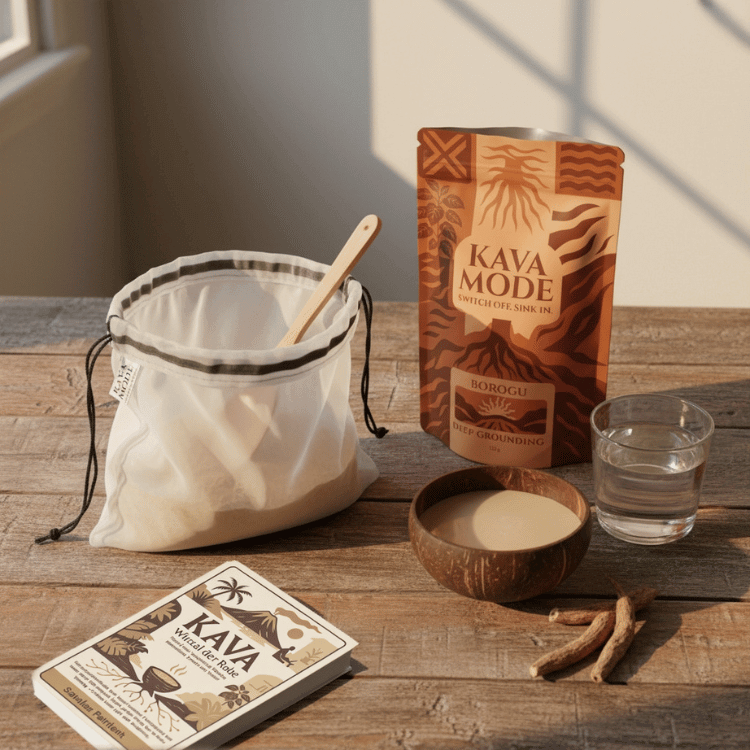
  1. Place 15-30g of kava powder into a filter bag (80 microns)
  2. Use 300-600ml of cold or lukewarm water
  3. Soak the bag for 5-10 minutes
  4. Knead vigorously for 15-20 minutes
  5. Squeeze out the liquid and knead for another 10-15 minutes
  6. Remove the bag and drink the kava immediately

Important: Always use cold or lukewarm water – hot water can destroy the kavalactones.

Can I prepare kava with a blender?

Blender/Mixer method:

  1. Add kava powder and water to the blender
  2. Mix for 4-6 minutes on high speed
  3. Strain through 80 microns filter
  4. Optional: With coconut milk for better taste

This method is faster, but the traditional preparation is often considered more authentic and effective.

Why is an 80 micron filter important?

The 80-micron mesh size offers the optimal balance:

  • Allows through: All active kavalactones and flavor compounds
  • Holds back: Coarse fibers that cause bitterness and stomach upset
  • Reduced: Fine sediments that impair the mouthfeel

80 microns is scientifically proven and traditionally proven for optimal kava extraction.

Can I use kava more than once?

Yes, you can use the same kava powder 2-3 times:

  • 1. Extraction: Strongest effect (100%)
  • 2. Extraction: Medium effect (60-70%)
  • 3. Extraction: Weak effect (30-40%)

Store the used powder in the refrigerator between extractions and use it within 24 hours or make several extractions one after the other.

How can I improve the taste of kava?

Taste improvement:

  • Coconut milk: Makes the texture creamier and milder
  • Honey: Natural sweetness (use sparingly)
  • Ginger: Warming, grounding note
  • Cinnamon: For ceremonial uses
  • Cocoa: Chocolatey, relaxing variant

Avoid: Citrus fruits or acidic additives, as these can interfere with the kavalactones.

What is the best time for kava?

Timing by variety:

  • Heady (Borogu): Daytime, before 6 p.m.
  • Balanced (Melo Melo, Bir Kar): Afternoon to early evening
  • Heavy (Palasa, Palarasul): Only in the evening, 2 hours before sleep

Meals: For best results, take kava on an empty stomach. Wait 3-4 hours after your last main meal.

Can I increase the dosage if I don't feel any effect?

Wait 30 minutes before considering a redose. Bir Kar has
sometimes a delayed effect, especially on first use.

Effect & Dosage

How does kava work and when does it start to work?

Onset of action:

  • First signs: 10-20 minutes (tingling in the mouth)
  • Main effect: 30-60 minutes
  • Duration of effect: 2-6 hours (depending on the variety)

Typical effects:

  • Relaxation without clouding of consciousness
  • Anxiety relief and emotional balance
  • Muscle relaxation
  • Increased sociability and communication
  • Improved mood

How much kava should I take?

Dosage guidelines based on experience:

Beginners : 10-25g

Experienced : 15-35g

Expert : 25-50g

Important: Always start with the lowest dose and increase slowly. Wait at least 30 minutes before re-dosing.

Can I drink kava every day?

Yes, that's possible without any problems. However, this is a personal issue.

Our recommended frequency is:

  • 3-5 times per week with 2 days of kava break.

Take breaks: Regular kava-free days help you to still notice the effects the next day and to cultivate a generally better body awareness.

During particularly stressful weeks or months, you can also drink kava daily. Kava is non-addictive, and you can take a break or stop completely at any time.

What is reverse tolerance in kava?

Reverse tolerance means that kava becomes more potent over time at the same dose—the opposite of the usual tolerance development. This phenomenon occurs in about 70% of kava users.

Why does this happen?

  • Kavalactones accumulate in adipose tissue
  • Receptors become more sensitive to kava
  • Enzyme systems adapt

In practical terms, this means that over time you may need less kava for the same effect.

Is kava addictive?

No, kava is not physically addictive. Studies show no potential for addiction when used properly.

However:

  • Psychological habituation is possible (as with coffee, tea, bread)
  • Excessive use can lead to skin problems (more in the next FAQ “What is Kava Dermopathy?”)
  • Regular breaks are recommended

Responsible use: Respect kava as a powerful tool, not as a daily consumer product.

What is kava dermopathy?

Kava dermopathy is a harmless, reversible skin change caused by very frequent, high-dose kava consumption. The skin becomes dry and flaky, especially on the hands and feet.

Prevention:

  • Maintain moderate dosage
  • Take regular breaks
  • Drink enough water
  • Skin care with natural oils

Reversible: Kava dermopathy disappears completely after reducing or stopping kava consumption and occurs only in about 2% of long-term users.

Safety & Health

Is kava safe for the liver?

Noble kava is safe when used properly. The 2007 WHO assessment confirmed the safety of traditionally prepared Noble kava.

The liver toxicity controversy arose from:

  • Use of Tudei Kava (inferior varieties)
  • Alcoholic extracts instead of water preparation
  • Use of leaves/stems instead of just roots
  • Combination with alcohol or medication

KAVA MODE Safety: We only use certified Noble Kava roots from Vanuatu.

Can I combine kava with alcohol?

NEVER combine kava with alcohol! This combination is extremely dangerous and can lead to:

  • Liver damage
  • Increased sedation
  • Respiratory impairment
  • unconsciousness

Safety distance: Keep at least 24 hours between alcohol and kava.

Which medications are incompatible with kava?

Critical interactions with:

  • Benzodiazepines: Increased sedation
  • Antidepressants: Especially MAOIs
  • Blood pressure medications: Increased effect
  • Sleeping pills: Dangerous sedation
  • Anticonvulsants: Altered effect
  • Opioids: Respiratory impairment

Important: Always consult a doctor if you plan to take medication before using kava.

Can I combine kava with coffee or guayusa?

Coffee + Kava: Not recommended, as both have different stimulation mechanisms and can interfere with each other.

Guayusa + Kava: Also not recommended. If you're looking for a natural, gentle energy combination, use these separately:

  • Morning: Guayusa for natural energy
  • Evening: Kava for relaxation

Better separated: Leave at least 3-4 hours between caffeine and kava for optimal effect.

Who should not use kava?

Kava is not suitable for:

  • Pregnant and breastfeeding women
  • People with liver disease
  • People with respiratory diseases
  • People with low blood pressure
  • People with a history of substance abuse

Can I drive to Kava?

No, this is not recommended!

Kava may impair reaction time , albeit minimally.

Safety distance: Wait at least 3 hours after consuming kava before driving.

What are the signs of a kava overdose?

Warning signs:

  • Extreme drowsiness or unconsciousness
  • Breathing problems or slowed breathing
  • Severe nausea or persistent vomiting
  • Complete loss of coordination
  • Severe allergic reactions
  • Confusion or disorientation

If these symptoms occur: Stop taking the medicine immediately and drink plenty of water.


Kava Mode Logo Favicon
Kava fashion
  • contact
  • 5% newsletter discount
  • 10% Bitcoin discount
  • Kava Book
  • B2B & Wholesale
  • Guayusa tea
  • Kava-Wiki
Legal
  • Terms and Conditions
  • Data protection
  • Revocation
  • Payment & Shipping
  • imprint
  • legislation
Newsletter & Promotions

Subscribe to our newsletter for kava knowledge , promotions , and discounts .


Payment methods
    Powered by Shopify
    Back to top
    • Choosing a selection results in a full page refresh.